


.

As an industrial network grows, connecting more devices is only part of the challenge. A factory may have separate networks for PLCs, production equipment, surveillance systems, and management computers. These systems often need to exchange data, but allowing every device to share the same network is not always practical.
This is where a managed Layer 3 industrial switch can make a difference. In addition to forwarding Ethernet traffic, it can route data between IP subnets, allowing network engineers to build a more structured network without relying on a separate router for every local routing task.
However, Layer 3 capability is not necessary for every industrial installation. The right choice depends on the number of network segments, the amount of traffic, the required routing functions, and the conditions in which the equipment will operate.
For industrial projects that need Gigabit connectivity, fiber uplinks, and routing capabilities in a demanding environment, Yuhang's ZX88GST4-M-SFP is one option worth evaluating. Understanding when this type of switch is needed helps buyers select equipment based on actual network requirements rather than specifications alone.
1. When Does an Industrial Network Need Layer 3 Switching?
A small industrial network may work perfectly well with a Layer 2 switch. If all connected devices communicate within the same IP subnet and the network has no need for routing between VLANs, adding Layer 3 functionality may offer little practical benefit. The situation changes as the network becomes more distributed.
When Different VLANs Need to Communicate
Industrial networks are often divided into VLANs to separate equipment according to its role. For example, a factory might place production controllers, monitoring computers, and surveillance equipment in different VLANs.
This arrangement helps organize network traffic and limits unnecessary communication between device groups. But separation creates another requirement: when devices in different VLANs need to exchange data, a routing function must connect them.
A managed Layer 3 switch can provide inter-VLAN routing when the relevant features are supported and configured. This allows traffic to move between designated network segments without sending every local routing request to an external router. For facilities with several production lines or departments, this can make the network easier to organize and expand.
When the Network Spans Multiple IP Subnets
As an industrial site adds equipment, maintaining a single large subnet may become less convenient. Separate workshops, production lines, and equipment areas may use different IP subnets to simplify addressing and network management.
Communication between these subnets requires routing.
A Layer 3 industrial Ethernet switch can handle this traffic as part of the switching infrastructure. Depending on the network design, this can reduce the need for a separate device to perform local inter-subnet routing.
The benefit is not simply fewer devices. It is the ability to build a network in which each segment has a clear purpose and communication paths can be managed more deliberately.
When Static or Dynamic Routing Is Required
The choice between static and dynamic routing depends on how the network is designed.
Static routing works well when network paths are predictable and administrators want to define routes manually. It is often suitable for smaller industrial networks with relatively stable topologies.
Dynamic routing can be more useful when a network contains multiple interconnected segments and routes need to be exchanged and updated automatically. The available benefits depend on the routing protocols supported by the switch and the way the network is configured. For industrial projects, buyers should confirm the specific routing features offered by a device rather than assuming that every Layer 3 switch supports the same protocols.
2. Layer 2 vs. Layer 3 Industrial Switches: Which One Fits Your Network?
The main distinction is straightforward: Layer 2 switches forward Ethernet frames within Layer 2 networks, while Layer 3 switches also provide IP routing capabilities.
| Requirement | Layer 2 Managed Switch | Managed Layer 3 Switch |
|---|---|---|
| Connect industrial Ethernet devices | Yes | Yes |
| Organize traffic using VLANs | Supported on suitable models | Supported on suitable models |
| Route traffic between IP subnets | Requires another routing function | Available on supported models |
| Configure static routes | Not a standard Layer 2 function | Available on supported models |
| Use dynamic routing protocols | Generally requires a separate routing device | Available when the required protocols are supported |
| Support a growing, segmented network | Depends on the overall architecture | Provides additional routing flexibility |
A Layer 3 switch is not automatically the best option. For a compact machine network with straightforward connectivity requirements, a Layer 2 switch may be more cost-effective.
For a facility with multiple VLANs, several IP subnets, and fiber links connecting different areas, Layer 3 functionality can provide greater flexibility.
The decision should begin with the network diagram. Identify which devices need to communicate, where routing is required, and how the network may change over the next few years. These details provide a more useful basis for selection than choosing a switch simply because it offers more features.
3. Why Do Port Configuration and Uplink Capacity Matter?
Routing capability is only one part of industrial switch selection. The device must also provide enough physical connectivity and bandwidth for the network it serves.
Consider a typical industrial architecture: field devices connect to access switches, traffic moves through aggregation equipment, and data is delivered to a central network or control system. As more devices are added, the links carrying aggregated traffic can become just as important as the access ports themselves.
Several specifications deserve attention.
Gigabit Ethernet ports: Suitable for connecting many industrial devices that require standard Ethernet connectivity.
PoE+ ports: Can supply power and data to compatible devices through Ethernet cabling, subject to the switch's power budget and per-port limits.
SFP fiber interfaces: Provide options for fiber connections between network devices, with the appropriate transceivers and fiber infrastructure.
10G SFP+ interfaces: Offer higher-speed uplink options where aggregated traffic exceeds what a Gigabit link can comfortably accommodate.
Fiber can be particularly useful when equipment is spread across different buildings or production areas. The appropriate transceiver, fiber type, transmission distance, and installation conditions must be checked before deployment.
It is also important to distinguish port speed from overall switching performance. A switch with 10G interfaces still needs sufficient switching capacity and suitable configuration to handle the expected traffic. Buyers should review the full technical specification rather than relying on the interface list alone.
4. What Should You Consider for Industrial Operating Environments?
An industrial switch may be installed inside a control cabinet, on a factory floor, or in equipment exposed to significant temperature changes. In these locations, environmental suitability matters as much as routing functionality.
Operating Temperature
Commercial networking equipment is not necessarily designed for extreme temperatures. Before choosing an industrial switch, check the specified operating range against the conditions expected at the installation site. A wide-temperature model can be useful in locations where ambient temperatures fluctuate considerably. However, temperature is only one part of the assessment. Power supply requirements, ventilation, electromagnetic compatibility, enclosure protection, and applicable certifications also need to be considered.
Mounting and Installation
DIN-rail mounting is common in industrial control cabinets because it can simplify installation alongside other automation components. Rack-mounted equipment may be more appropriate for centralized network cabinets or equipment rooms. The right installation method depends on the physical layout, available space, wiring arrangement, and maintenance requirements of the project.
Reliability and Network Recovery
Industrial networks may support equipment that needs consistent communication throughout the working day. In these applications, buyers should evaluate more than the switch's basic forwarding capability.
Depending on the project, relevant considerations may include link redundancy, recovery behavior, power arrangements, monitoring functions, and supported network management features.
A managed Layer 3 switch can contribute to a well-organized network, but it does not guarantee network availability on its own. Reliability depends on the complete network design, configuration, and installation.
5. How Does the Yuhang ZX88GST4-M-SFP Fit These Requirements?
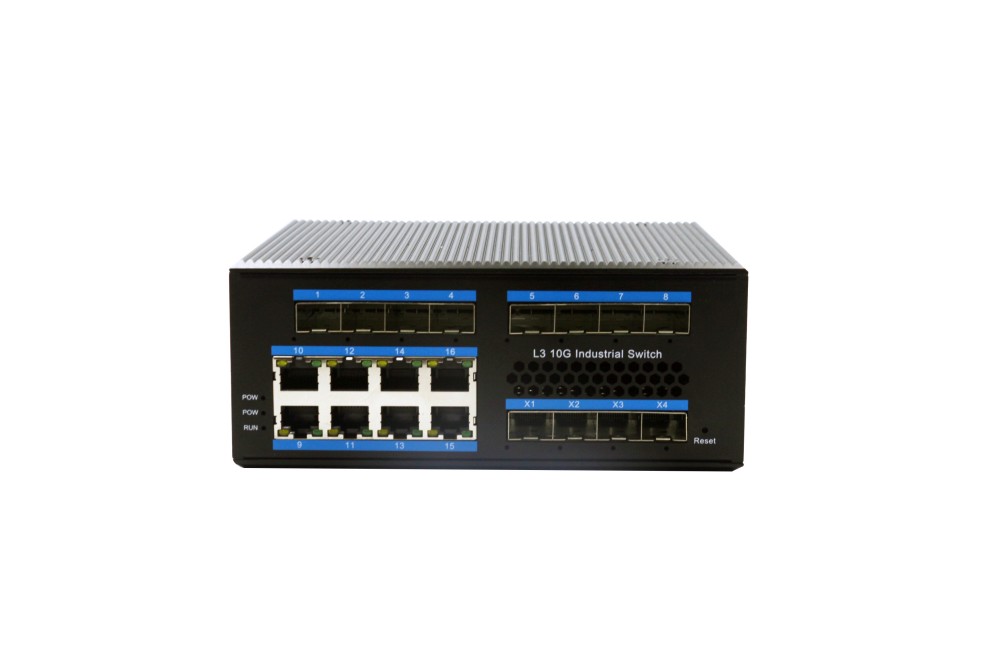
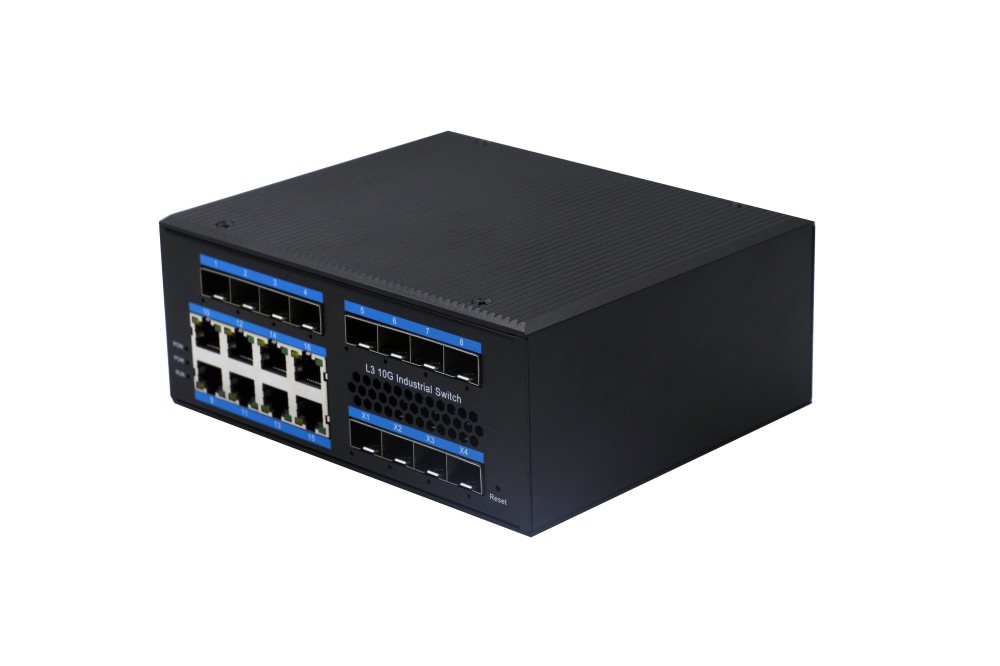
The Yuhang ZX88GST4-M-SFP is an L3 core switch designed for industrial networks that need Gigabit connectivity, fiber interfaces, routing functions, and operation across a wide temperature range.
Its combination of access ports and expansion options makes it worth considering for industrial aggregation and core-network deployments. Whether it is the right choice depends on the exact port configuration and performance requirements of the project.
Gigabit Ethernet and PoE+ Connectivity
The ZX88GST4-M-SFP provides eight Gigabit Ethernet PoE+ ports, according to the supplied product specifications.
PoE+ can simplify cabling for compatible powered devices, such as network cameras and other Ethernet-connected equipment that supports the required power standard. Instead of arranging a separate power connection for every device, installers can deliver power and data over the same Ethernet cable.
For a proposed deployment, buyers should confirm the total PoE power budget, per-port power limits, and compatibility with the devices being connected.
Fiber Connectivity and 10G SFP+ Expansion
The product specification identifies eight Gigabit SFP ports and a modular design that supports up to four 10G SFP+ ports.
These interfaces provide options for connecting fiber-based network infrastructure and increasing uplink capacity as requirements grow. For example, a facility may use Gigabit connections for individual industrial devices while using higher-speed links to connect aggregation or core equipment.
The modular approach also gives network planners room to consider future bandwidth requirements without treating the initial configuration as the final stage of network development. Before ordering, confirm the exact hardware configuration, the availability of the required interfaces, and compatibility with the selected optical transceivers.
Static and Dynamic Routing
The ZX88GST4-M-SFP supports static and dynamic routing, according to the supplied specifications.
This makes it relevant to network designs that need to connect multiple IP subnets or route traffic between different network segments. Static routing can suit predictable network paths, while dynamic routing may help in more interconnected environments where supported protocols are required.
The specific dynamic routing protocols should be confirmed with Yuhang during technical evaluation.
IPv4 and IPv6 Support
The switch supports IPv4/IPv6 hardware dual-stack operation and line-rate forwarding, as specified in the product information.
Dual-stack capability allows IPv4 and IPv6 to operate within the same network environment. This can be useful for industrial organizations that need to maintain existing IPv4 devices while preparing for IPv6-capable systems.
Actual forwarding performance depends on the device configuration, traffic profile, enabled functions, and specified hardware limits. For demanding applications, buyers should request the relevant performance data before finalizing the network design.
Wide-Temperature Operation and DIN-Rail Installation
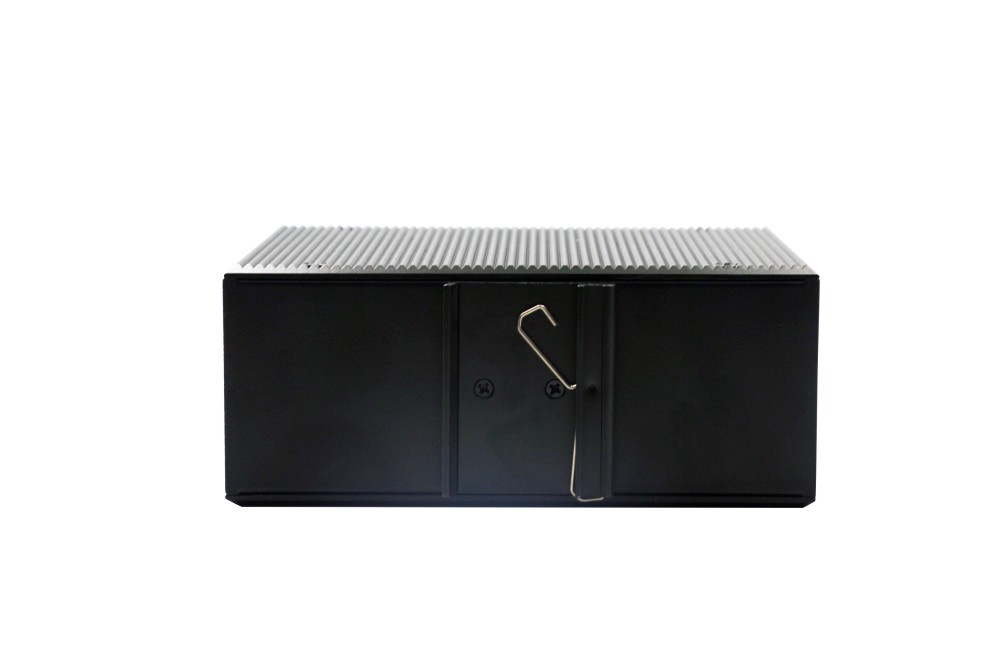
The ZX88GST4-M-SFP has a specified operating temperature range of -40°C to 85°C and supports DIN-rail installation.
These characteristics can be useful for industrial projects in which equipment must operate across a broad range of ambient temperatures or be installed inside suitable control cabinets.
As with any industrial switch, the stated temperature range should be assessed against the actual installation conditions. Buyers should also review the product's electrical, environmental, and regulatory specifications to ensure that it meets the requirements of the intended application.
Overall, the ZX88GST4-M-SFP combines routing capability, Gigabit connectivity, fiber interfaces, 10G expansion options, and wide-temperature operation in a single industrial networking platform.

6. Which Industrial Applications Can Benefit From Layer 3 Switching?
The value of a managed Layer 3 switch depends on the communication requirements of the application rather than the industry name alone.
Factory Automation
A factory may have separate networks for PLCs, HMIs, industrial computers, and monitoring systems. Where these segments need to exchange data, Layer 3 switching can provide a practical way to manage inter-subnet communication.
Industrial Monitoring and Surveillance
Monitoring systems may combine cameras, data collection equipment, and centralized management platforms. Gigabit access ports and fiber uplinks can help connect distributed devices, while routing can organize communication between network segments.
The required bandwidth should be calculated according to the number of devices, data rates, and expected traffic patterns.
Distributed Industrial Facilities
Industrial sites with multiple workshops or equipment areas may use fiber links to connect separate network segments. A Layer 3 switch can help route traffic between these networks while providing options for higher-speed uplinks.
For installations exposed to extreme temperatures, the environmental specifications of the switch become an additional selection criterion.
Energy and Infrastructure Projects
Energy facilities and industrial infrastructure may have distinct monitoring, control, and management networks. A Layer 3 switch can support routing between these segments when the design calls for it.
For critical infrastructure, the equipment must also meet the project's availability, security, environmental, and regulatory requirements. Routing support alone is not sufficient to establish suitability for a particular control application.
7. How Can You Decide Whether You Need a Managed Layer 3 Switch?
Before purchasing, map the network and answer a few practical questions:
Do devices in different VLANs or IP subnets need to communicate?
Is static routing or a specific dynamic routing protocol required?
How many Gigabit Ethernet and fiber ports are needed?
Will aggregated traffic require 10G uplinks?
Are PoE+ ports necessary for connected devices?
Must the equipment operate across a wide temperature range?
Is DIN-rail mounting required?
Which management, monitoring, and redundancy functions are essential?
If the network requires inter-subnet routing, multiple fiber connections, or a scalable aggregation architecture, a managed Layer 3 industrial switch may be appropriate.
If all devices operate within a single subnet and the network has no routing requirements, a Layer 2 switch may be enough.
For buyers evaluating the Yuhang ZX88GST4-M-SFP, the next step is to compare its confirmed port configuration, routing features, switching capacity, and environmental specifications with the requirements identified in the network plan.
Conclusion:
Industrial networks generally need a managed Layer 3 switch when they must route traffic between IP subnets, connect multiple VLANs, or support a more structured and expandable network architecture.
The decision should also account for physical connectivity, uplink bandwidth, environmental conditions, and future expansion. A switch that meets the routing requirements but lacks sufficient ports or the necessary industrial specifications may not be the right fit for the project.
The Yuhang ZX88GST4-M-SFP offers a combination of eight Gigabit Ethernet PoE+ ports, eight Gigabit SFP ports, support for up to four 10G SFP+ ports, static and dynamic routing, IPv4/IPv6 hardware dual-stack operation, a -40°C to 85°C operating temperature range, and DIN-rail installation.
For industrial network designers and equipment buyers, evaluating these capabilities against the actual network topology is the most reliable way to determine whether this L3 managed industrial switch meets the application requirements.
Frequently Asked Questions (FAQ)
1. When is a Layer 3 industrial switch necessary?
A Layer 3 industrial switch is useful when a network needs to route traffic between different IP subnets or VLANs. It can also help simplify industrial network architectures that connect multiple production areas or network segments.
2. Is a Layer 3 switch better than a Layer 2 switch?
Not in every situation. A Layer 3 switch provides routing capabilities, while a Layer 2 switch may be sufficient for straightforward local connectivity. The choice depends on the network topology, routing requirements, and budget.
3. Does the Yuhang ZX88GST4-M-SFP support 10G SFP+ ports?
According to the supplied specifications, its modular design supports up to four 10G SFP+ ports. Buyers should confirm the exact configuration and compatible transceivers for their intended deployment.
4. Why does operating temperature matter when selecting an industrial switch?
The switch must operate within the environmental conditions of its installation site. The ZX88GST4-M-SFP has a specified operating temperature range of -40°C to 85°C, but other environmental and electrical requirements should also be reviewed.
5. What should buyers verify before purchasing an L3 managed industrial switch?
Check the port configuration, routing protocols, IPv4/IPv6 support, switching capacity, fiber compatibility, PoE power budget, operating temperature, mounting method, management features, and applicable certifications. For a specific project, these requirements should be confirmed against the manufacturer's documentation.